
Heap
Autocapture product analytics from San Francisco, now part of Contentsquare
One snippet records every click, page view and form submission, so you can build funnels and journeys on past data without planning events first. Paid prices are not published, replay and heatmaps are add-ons on quote-only plans, and data can lag up to an hour.
- Free up to 10k sessions
- Captures every click
- No public paid prices
- Sets a cookie by default
We make WireBoard, one of the tools we review. It is scored on the same criteria as every other tool. How we review
Who it suits
A good fit if
- You run a web app or SaaS product and want funnels, journeys and retention without writing tracking code for every button.
- You want to answer questions about past behaviour you never planned to track.
- You can sign a sales-led contract and want product analytics, replay and heatmaps from one vendor.
Look elsewhere if
- You want a price before talking to sales: only the Free plan has one.
- You need fresh numbers: Heap says it does not provide data in real time, and new events typically take up to an hour to reach charts.
- You want to run without a consent banner: Heap sets a 13-month cookie by default.
Scores
Below average on ease of use, privacy and pricing.
- Heap
- Average of the 18 tools we reviewed
Every tool is scored from 0 to 5 on the same seven criteria, and the overall score is their average. How we score
Why these scores
- Features4.5, average 4.1
- Autocapture, funnels, journeys, retention, segments, APIs and warehouse sync, with session replay, heatmaps and account analytics kept for the quote-only Pro and Premier plans.
- Reporting4.5, average 4.1
- Charts and dashboards you build yourself, segments everywhere and scheduled email reports, with CSV export from Growth and warehouse sync from Pro.
- Design4.0, average 3.9
- Clean, consistent charts and dashboards, with chart customisation reserved for Growth and up.
- Real-time data3.0, average 3.2
- A live data feed shows raw events within about 15 seconds, but Heap says new events typically take less than an hour to reach its charts.
- Ease of use3.0, average 3.8
- One snippet captures everything, but turning raw clicks into named events and reading journeys takes real learning.
- Privacy2.0, average 3.2
- A 13-month cookie with a user ID and the text of clicked elements are captured by default, though Heap says it does not capture IP addresses by default.
- Pricing2.0, average 3.6
- A free plan for up to 10,000 sessions a month, but no paid plan has a public price.
Key facts
Autocapture saves tracking work, but a 13-month cookie and full click capture are on by default.
- Price
- Free up to 10,000 sessions a month. Growth is estimated after you install the snippet, Pro and Premier on request
- Free plan
- 10,000 sessions a month, core charts (funnels, journeys, retention), 1 project
- Paid unit
- Sessions a month. A web session ends after 30 minutes without a page view
- Over the limit
- Heap keeps collecting, but you must upgrade before you can view your data again
- Cookies
- A first-party cookie with a user ID, kept 13 months minus a day
- IP addresses
- Used for location, not captured by default, says Heap
- Autocapture
- Page views, clicks, form changes and submissions, with element text unless you switch it off
- Session replay and heatmaps
- Add-ons on Pro and Premier only
- Data stored in
- The US (AWS, Virginia) by default. Heap also hosts in AWS Ireland and lists region-specific storage on Premier
- Company based in
- United States (San Francisco), part of France's Contentsquare since 2023
- Live view
- Live data feed of raw events, up to 15 seconds behind. Charts typically follow within an hour
- Data kept for
- 6 months on Free, 12 months on Growth, Pro and Premier, up to 3 years with an add-on on Pro and Premier
From Heap’s own site, checked on .
Pricing
The Free plan is public. Every paid plan needs an install or a sales call before you see a price.
Freefor up to 10,000 sessions a month on one project, with 6 months of history
Free
Up to 10,000 sessions a month, core charts, autocapture, 6 months of history, 1 project
Free
Growth
Unlimited users and reports, CSV exports, Sense AI assistant, 12 months of history
Estimate after install
Pro
Account analytics, report alerts, 3 projects, replay and heatmaps as add-ons
On request
Premier
Warehouse sync, unlimited projects, advanced permissions, region-specific storage
On request
Heap prices by sessions a month. Growth shows an estimate once the snippet is installed, and sales quote Pro and Premier. Contentsquare also sells Heap's features inside its own Product Analytics plans, also on quote.
Our review
What you get
Heap is product analytics built on autocapture. Its snippet records page views, clicks, changes to form fields and form submissions on every page, so you can define an event later ("clicked Start trial") and see it on past data. On top sit charts for usage over time, funnels, journeys (the paths people take), retention and segments, plus Illuminate, which Heap says points out friction in flows you were not watching. Paid plans add Sense, an AI chat assistant.
Account analytics, the engagement matrix and report alerts come with Pro. Session replay, heatmaps and error analysis are add-ons on Pro and Premier. Heap Connect, which copies your data to a warehouse such as Snowflake, BigQuery or Redshift, is an add-on on Pro and included on Premier. Heap also captures mobile apps, so a journey can run from the website into the app.
Contentsquare, an experience analytics company founded in Paris, bought Heap in 2023, and it also owns Hotjar. Heap.io still sells Heap under its own name, and Contentsquare says existing Heap accounts and plans keep working as usual. Heap's privacy policy now points to Contentsquare's.
Who it is for
Heap suits SaaS companies, online retailers, and financial and healthcare teams (the sectors its own pages target) that want funnels, journeys and retention without writing tracking code for every button. It shines when questions come up after the fact: a product manager can ask how many people opened a settings page last quarter, even if nobody planned that event.
It suits less well a content site that mainly counts readers, a team that needs a price before talking to sales, or anyone who needs numbers that are fresh to the minute. If you want product analytics with public prices, look at Mixpanel. For a broader comparison, see the product analytics shortlist.
Setting it up
Installing is one script in the page head. Heap's guides also cover Google Tag Manager, WordPress, Wix, Squarespace, Segment, iOS, Android, React Native, Flutter and other platforms, and data starts arriving at once. A new account gets one main project with two environments, production and development, and Heap suggests sending test data to development first.
The time goes into the next steps. You name raw clicks as events with the visual labeller, and send user identities through the identify API so a person's sessions join up across devices. You add properties such as plan or company, and use the capture controls to block pages or subdomains you do not want recorded. Then you learn which chart answers which question. On Growth and up, the Sense chat assistant is meant to shorten that learning.
Expect a first funnel on day one, and a few weeks before your event definitions are tidy enough to trust.
Reports and dashboards
Charts are built from users, sessions and events, filtered and grouped by any property, and saved to dashboards. Funnels show conversion between steps and how long people take; journeys map paths before or after an action; retention shows who comes back; segments group users by behaviour and work across charts. Because autocapture keeps the raw data, a new event definition applies to the past as well. Rage clicks are captured automatically on paid plans.
Saved charts and dashboards can be emailed daily, weekly or monthly, with a CSV attached. CSV exports and chart customisation come with Growth, and report alerts and the engagement matrix need Pro. For data outside the app, Heap offers APIs on every plan, Heap Connect to sync data to your warehouse, and a one-time CSV export of your data if you leave.
Heap's live data feed streams raw and labelled events as they arrive, up to about 15 seconds behind, which is useful for checking your tracking. The rest of the app is slower. Heap says it does not provide data in real time, and that a new event typically takes less than an hour to move from the live feed into charts.
Privacy and your data
Heap sets first-party cookies. The main one (_hp2_id or _hp5_meta, depending on the snippet version) holds a user ID for 13 months minus a day. Accounts with session replay get two more, one of them kept for 2 years. The newer SDK can keep data in localStorage instead, but there is no cookieless mode.
By default Heap also captures the visible text of elements people click. You can switch that off, redact text and attributes with Heap Redact, or block pages and subdomains in the capture controls. Heap says it does not capture IP addresses by default and uses them only to find a visitor's country, region and city, which you can also turn off.
Heap's sub-processor list puts its main hosting on AWS in Virginia, with an EU location on AWS in Ireland, and Heap's pricing lists region-specific storage only on Premier. The same list places Heap's AI features and the session replay add-on in the US. Heap's data processing agreement includes standard contractual clauses for transfers from the EU to the US.
Data history is 6 months on Free and 12 months on paid plans, and Pro and Premier can buy up to 2 more years. Heap deletes data older than 37 months, or older than your history limit if that is longer. Whether you need a consent banner depends on the law where you operate.
Pricing in practice
Heap counts sessions, not events. On the web, a session ends after 30 minutes without a page view. A small site pays nothing up to 10,000 sessions a month, with autocapture, core charts, 6 months of history and one project. Note what happens at the limit: Heap keeps collecting, but asks you to upgrade before you can view your data again.
A growing product moves to Growth. Heap publishes no price for it: you install the snippet and get an estimate based on your sessions. Growth adds the Sense assistant, unlimited users and reports, CSV exports and 12 months of history, but still no session replay or heatmaps.
A larger organisation buys Pro or Premier, both on custom session pricing from sales. Pro adds account analytics, report alerts and a customer success manager, with replay, heatmaps, Heap Connect and extra history as add-ons. Premier includes Heap Connect, unlimited projects, advanced permissions, audit logs and region-specific storage. Contentsquare also sells Heap's features inside its own Product Analytics plans, also on quote.
Because no paid price is public, compare your quote with tools that publish theirs: see our web analytics pricing comparison.
Alternatives to Heap
WireBoard (made by us) fits if Heap's delay is the problem and you mainly need web analytics. Its dashboards update within seconds, it tracks events, goals, funnels and revenue on every plan, and its prices are public: free for 50,000 pageviews a month on 2 sites, then $9 a month for 100,000 pageviews on 50 sites.
Mixpanel covers funnels, retention and flows with public prices, and includes session replay and heatmaps on its free plan of 1 million events a month.
Matomo offers funnels, cohorts, heatmaps and recordings in open-source software you can host yourself, or on its cloud in Frankfurt from $26 a month.
Hotjar, now sold as part of Contentsquare, focuses on heatmaps, recordings and surveys rather than product analytics, with a free plan for 200,000 sessions a month. Our heatmaps shortlist lists the other options.
Where it falls short
Pricing is the first wall. Only the Free plan has a public price: Growth shows an estimate once you install the snippet, and sales quote Pro and Premier. Free stops at 10,000 sessions a month with 6 months of history, and if you pass the limit you have to upgrade before you can see your data again.
Heap is not real-time. Its own docs say it does not provide data in real time, and the live data feed is a tool for checking that events arrive. Session replay and heatmaps, which Mixpanel includes on its free plan, cost extra here on quote-only plans.
Autocapture means a lot of raw data. Someone has to name events and keep definitions tidy, or reports become hard to trust, and clicked text is captured by default, so check what your pages show. With a 13-month cookie and US hosting by default, plan for consent in the EU.
How it compares
Mixpanel covers similar ground with public prices and replay on its free plan. Hotjar, also owned by Contentsquare and now sold as part of it, focuses on heatmaps and recordings.
- Free plan
- Up to 50k pageviews
- Cookieless
- Optional
- Open source
- No
- EU hosting
- Yes
- Free plan
- Up to 100k events
- Cookieless
- Yes
- Open source
- Yes
- EU hosting
- Your choice
- Free plan
- Up to 1M events a month
- Cookieless
- No
- Open source
- No
- EU hosting
- Your choice
Heap (this review)
Starts at Free
3.3out of 5
- Free plan
- Up to 10k sessions a month
- Cookieless
- No
- Open source
- No
- EU hosting
- Your choice
- Free plan
- Up to 200k sessions
- Cookieless
- Optional
- Open source
- No
- EU hosting
- Yes
- Free plan
- No
- Cookieless
- No
- Open source
- No
- EU hosting
- No
- Free plan
- No
- Cookieless
- No
- Open source
- No
- EU hosting
- No





Made by us

WireBoard
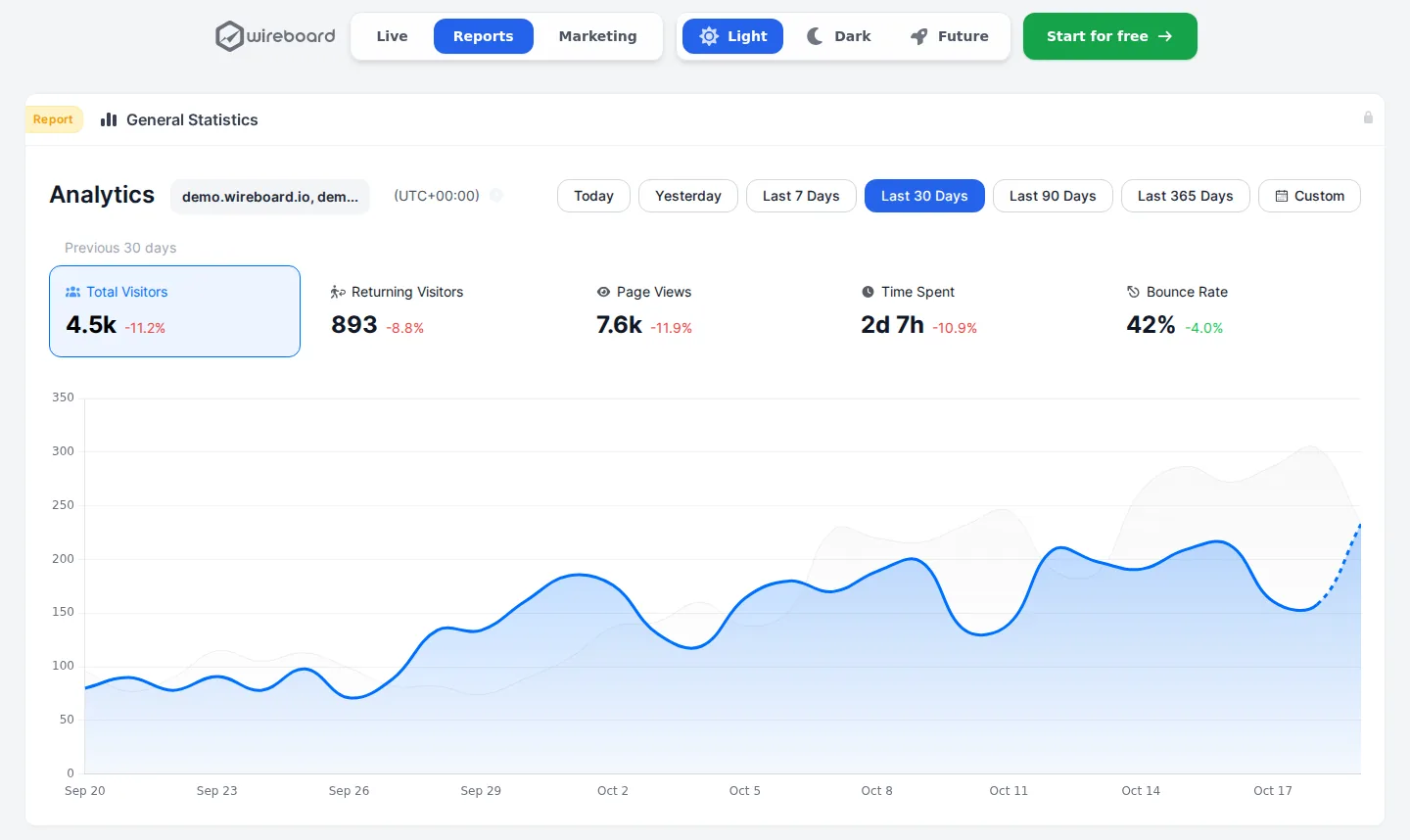
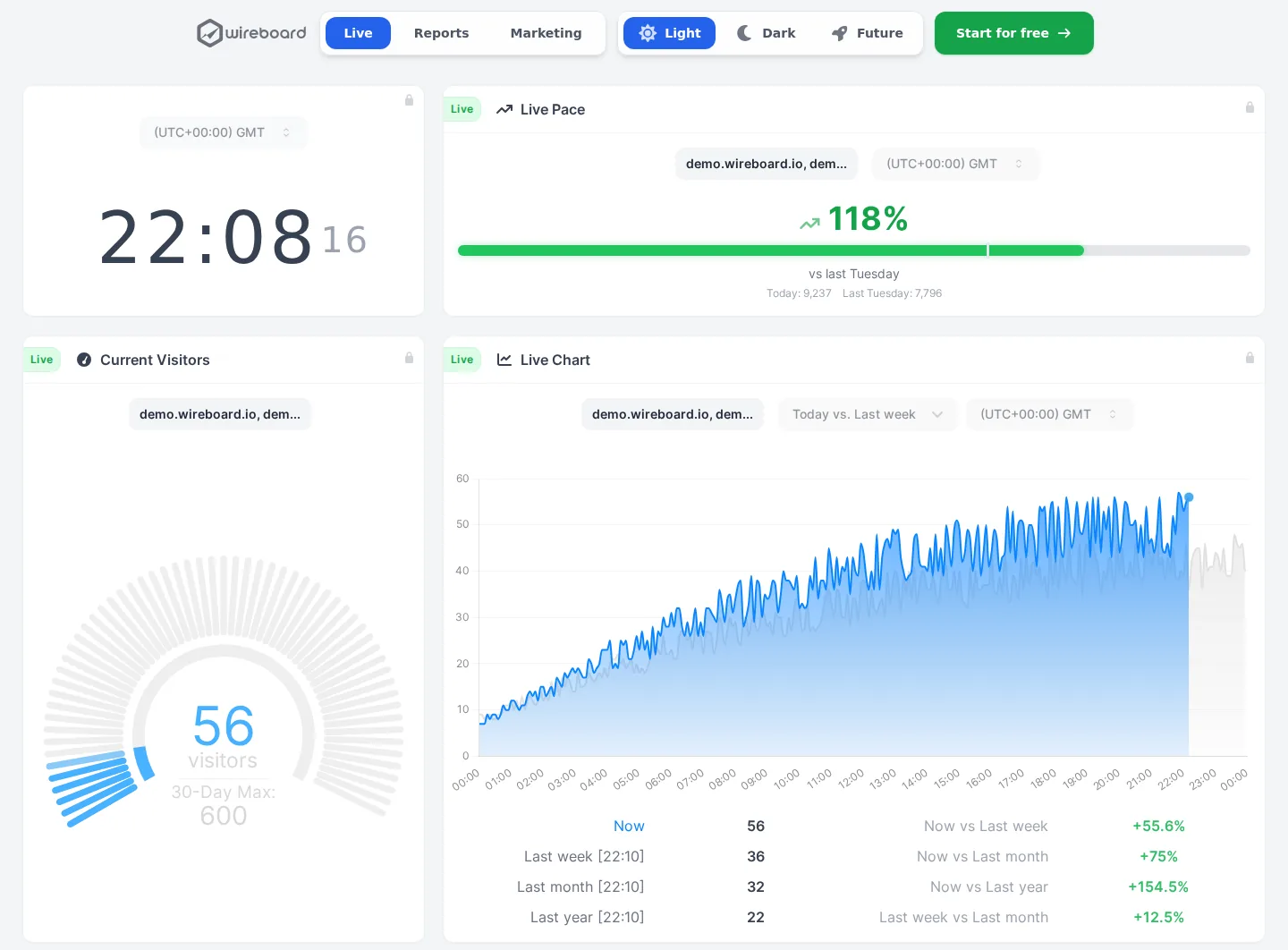
See your traffic as it happens, on live dashboards you build yourself. Nearly every feature is on the free plan.
- Visitors, sources and events streamed live
- Several sites in one view, on 60+ widgets
- Events, goals, funnels and revenue on every plan
- Free for 2 sites, $9 a month for 50
- Data processed in Germany and Finland
Questions
Is Heap still available after the Contentsquare deal?
Yes. Contentsquare bought Heap in 2023, and heap.io still sells Free, Growth, Pro and Premier plans under the Heap name. Contentsquare says existing Heap accounts and plans keep working as usual, and it also sells Heap's features as part of its own Product Analytics plans.
Is Heap free?
Yes, for up to 10,000 sessions a month, with autocapture, core charts (funnels, journeys, retention), 6 months of history and one project. Session replay, heatmaps, CSV exports and the Sense assistant are not included. If you go over, Heap keeps collecting but asks you to upgrade before you can view your data again.
How much does Heap cost?
Heap publishes a price only for its Free plan, which covers up to 10,000 sessions a month. Growth shows an estimate once you sign up and install the snippet, and Pro and Premier use custom session pricing from Heap's sales team. Session replay, heatmaps and extra data history are add-ons on Pro and Premier, so the quote also depends on what you add.
What does Heap autocapture record?
Heap's web snippet records page views, clicks, changes to form fields and form submissions on every page where it is installed, including the visible text of clicked elements. You can switch text capture off, redact elements, and block pages or subdomains from capture in the settings. Because the data is already stored, events you define today also cover the past.
Does Heap work without cookies?
No. The web snippet keeps a user ID in a first-party cookie that lasts 13 months minus a day, and the newer SDK can use localStorage instead, which is still storage on the visitor's device. Heap says it does not capture IP addresses by default and uses them only to find a visitor's location. Whether you need consent depends on the law where you operate.
Where is Heap data stored?
In the US by default, on AWS in Virginia, according to Heap's sub-processor list. Heap also hosts data on AWS in Ireland for accounts in its EU data centre, and its pricing lists region-specific storage on the Premier plan. The same list places Heap's AI features and the session replay add-on in the US. Transfers from the EU rely on standard contractual clauses in Heap's data processing agreement.
Is Heap real time?
No, and Heap says so. Its live data feed streams raw events within about 15 seconds, which helps you check that tracking works. Charts and dashboards lag behind, and Heap says a new event typically takes less than an hour to move from the live feed into charts. If you need traffic you can watch as it happens, look at a tool built around a live view.
Heap or Mixpanel?
Both follow users through funnels, journeys and retention. Heap records every click from one snippet, so events you define later cover the past, while Mixpanel's autocapture is optional and most teams plan their events. Mixpanel publishes its prices and includes session replay and heatmaps on its free plan of 1 million events a month. Heap's paid plans are priced by sales, and replay is an add-on.
About this review
First published on . Facts and prices checked on against Heap’s own site.
Analytics Alternative is run by SwissOps, which also makes WireBoard, one of the tools on this site. WireBoard is scored on the same seven criteria as every other tool. How we review
Where the facts come from:
- heap.io/pricing
- heap.io/about
- heap.io/heap-sub-processors
- contentsquare.com/heap
- contentsquare.com/pricing
- help.heap.io/hc/en-us/articles/37271939081617-What-cookies-does-Heap-set-and-what-are-they-used-for
- help.heap.io/hc/en-us/articles/37271887185041-Heap-Privacy-Features
- help.heap.io/hc/en-us/articles/37271965468305-How-do-I-block-the-collection-of-IP-or-geolocation-information
- help.heap.io/hc/en-us/articles/37271985221137-Autocaptured-Data
- help.heap.io/hc/en-us/articles/37271920998161-How-do-I-get-real-time-data-in-Heap
- help.heap.io/hc/en-us/articles/37271987293073-Live-data-feed
- help.heap.io/hc/en-us/articles/37271967170321-I-saw-a-custom-event-in-my-live-data-feed-but-I-can-t-find-that-event-anywhere-in-Heap
- help.heap.io/hc/en-us/articles/37271837236113-Data-history
- help.heap.io/hc/en-us/articles/37271989412241-Installation-Guides
- help.heap.io/hc/en-us/articles/37271965550609-How-do-I-get-data-out-of-Heap
- help.heap.io/hc/en-us/articles/50560292050321-Heap-MCP-overview
- help.heap.io/hc/en-us/articles/37271875549841-Schedule-email-subscriptions
Spotted something out of date? Tell us.